AI Receptionist vs Answering Service: Which Should You Choose?
An AI receptionist books, reschedules, and answers FAQs; an answering service just takes a message. Here is how they compare on price and results.

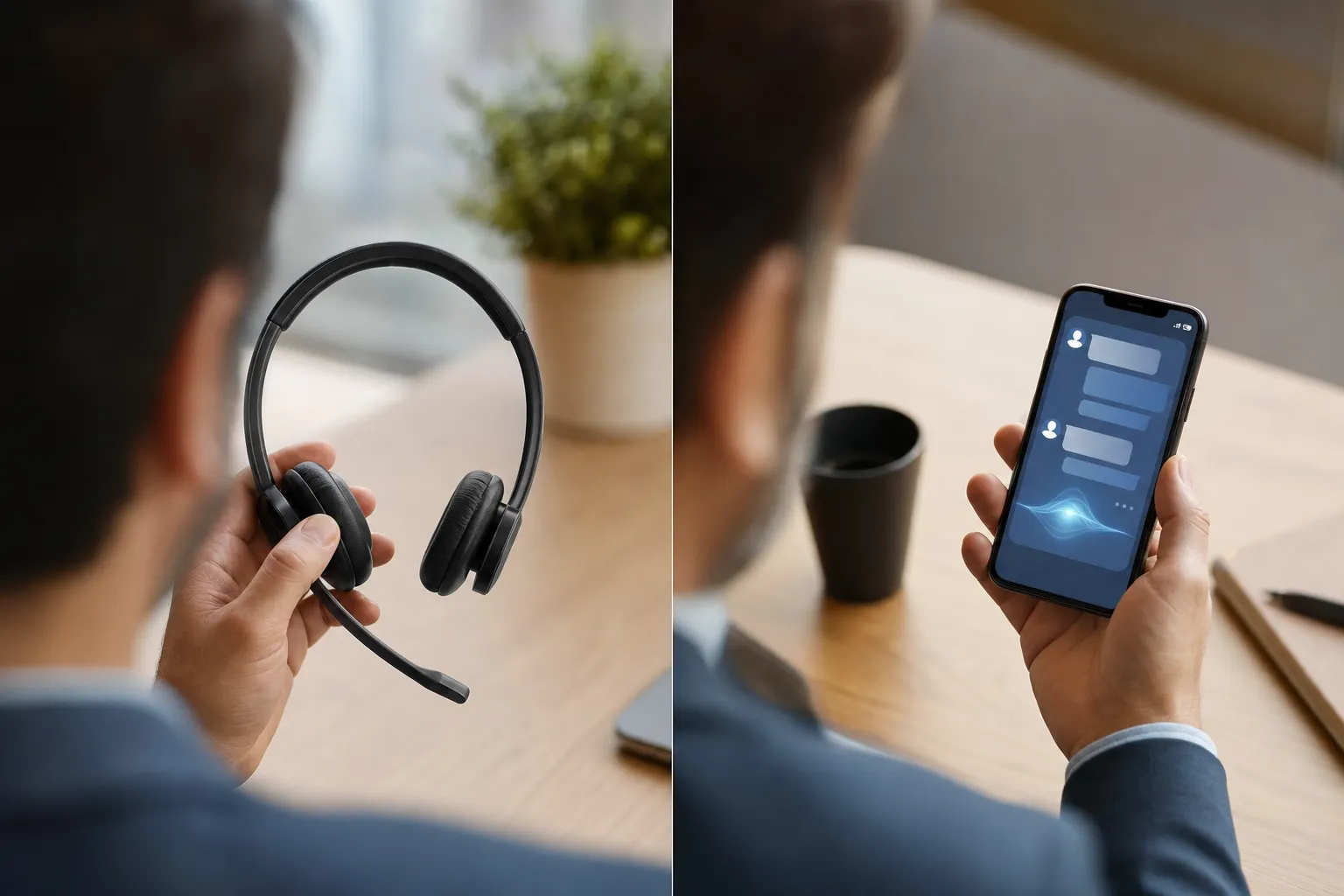
An AI receptionist and an answering service both pick up your phone, but they do very different jobs. An answering service takes a message and passes it on for someone to deal with later. An AI receptionist finishes the task on the call: it answers questions, checks your live calendar, books or reschedules the appointment, and syncs it to your CRM, on a flat monthly fee. For appointment-based businesses, that difference decides whether a call becomes a booking or a sticky note. If you already know you want the booking, the Automis AI voice receptionist is built for exactly that; if you are still weighing the two, this guide spells out where each one fits.
What is the difference between an AI receptionist and an answering service?
The core difference is what happens at the end of the call. An answering service ends with a message; an AI receptionist ends with a completed action. A message-taker greets the caller, notes who rang and why, and hands that note to your team to follow up later. That follow-up is where bookings quietly die, because by the time someone calls back, the caller has often already booked with whoever answered live.
An AI receptionist skips the middle step. It handles the whole conversation, confirms the appointment type, offers a real slot from your calendar, and locks it in before the caller hangs up. Nothing waits in a queue for a human to process, so there is no window for the lead to drift to a competitor.
Where an answering service still makes sense
An answering service is not useless. If your calls are genuinely just messages, an emergency line for a plumber, an out-of-hours legal intake that a partner must handle personally, then a warm human voice taking a careful note is a reasonable fit. The mismatch shows up the moment your callers are trying to do something: book, reschedule, ask about availability. A message-taker cannot do any of that, so every one of those calls turns into homework for your staff.
Can an AI receptionist actually book appointments?
Yes, and booking is the whole point rather than a bonus feature. A capable AI receptionist reads a live calendar, understands the difference between a first consultation and a follow-up, and offers only slots that are genuinely open. It avoids double-booking, writes the confirmed appointment back to your CRM, and can send the caller a confirmation, all inside the same call.
It also handles the awkward jobs a message pad cannot. A caller who wants to move Thursday to Monday gets it done on the spot. Someone asking "do you take my insurance" or "how much is a whitening" gets an answer instead of a promise that someone will call back. And because it works across voice and messaging, the caller reaches you on whatever channel they already used.
Rule: an answering service ends the call with a question ("who should call them back?"). An AI receptionist ends it with an answer ("you are booked for Tuesday at 3").
AI receptionist vs answering service: how do they compare on cost and value?
An AI receptionist usually wins on both predictable cost and finished work, while an answering service wins only where a plain message is genuinely all you need. The table below lays out the trade-off. Answering-service figures are illustrative public ranges, clearly marked, not a specific quote, because per-minute and per-call pricing varies widely by vendor.
| What you compare | AI receptionist (Automis Voice AI) | Traditional answering service |
|---|---|---|
| Typical pricing | Flat fee from EUR 297/mo, no per-minute meter | Often per minute, per call, or a monthly retainer (illustrative; varies by vendor) |
| Cost predictability | High: the price is the same on a busy month | Low: busier months cost more, exactly when you can least forecast it |
| End of the call | A booked appointment in your calendar | A message for your team to action later |
| Books and reschedules | Yes, native and automatic | Rarely: usually just takes a message |
| Answers FAQs | Yes, instantly and consistently | Limited to a short script |
| Hours covered | 24/7, nights, weekends, holidays | Often 24/7, but scope and quality vary |
| Concurrent calls | Many at once, no busy signal | Depends on their staffing that shift |
| Writes to your CRM | Yes | Not typically |
| Recovers missed calls | Yes, built in | Not usually |
| Speaks the caller's language | Multiple languages, same quality | Depends on who is on shift |
The pattern is clear. An answering service gives you a human voice and a note, and its per-minute model makes your busiest months your most expensive. An AI receptionist gives you a flat price, full coverage, and a completed booking rather than a task for tomorrow. For a deeper breakdown of where the numbers land, the AI receptionist cost guide walks through the pricing tiers in detail.
Is an AI receptionist cheaper than an answering service?
In most cases yes, and the way you are billed matters as much as the headline number. Automis Voice AI is a flat fee from EUR 297 per month with no per-minute charges, so a surge in calls means more appointments at the same price, not a bigger invoice. Many answering services bill per minute or per call, which quietly punishes you for being busy: a good week of inbound calls becomes your most expensive week.
There is a second, hidden cost to the answering-service model. Because it only takes messages, someone on your team still has to call every one of those people back. That labour never shows up on the answering-service bill, but it is real time spent chasing callers who may already have booked elsewhere. With an AI receptionist, that work simply does not exist, because the booking already happened.
What does the real cost of a missed or mishandled call look like?
The most expensive call is the one that ends in a voicemail or an unreturned message, because in an appointment business that is usually a lost booking. A voicemail is rarely a callback. It is a prospect dialing the next clinic, salon, or firm on the list, and a message an answering service takes at 8pm is only worth anything if someone actually rings back in time.
A worked example on plausible numbers
Put a number on it, clearly as an example rather than a claim about your business. Say your average new booking is worth EUR 250 in first visit plus early repeat value, and ten calls a week currently end in voicemail or an unactioned message. If just three of those ten would have booked, that is EUR 750 a week, roughly EUR 3,000 a month, in appointments that never happened. Against a EUR 297 plan, an AI receptionist has to save barely more than one of those calls a week to pay for itself, and everything above that is margin you were donating to whoever picked up live.
That loss is invisible on your accounts because it never became an invoice, which is exactly why it goes unmanaged. If you want your own figure instead of an example, run it through the free Automis missed-call revenue calculator; it takes a couple of minutes and gives you a concrete number to weigh against the monthly plan.
How does this play out in a real business?
For a live deployment, look at Clinica Santa Maria, a dental clinic running the Automis AI voice receptionist on its real phone line. The clinic uses the agent to answer calls, handle patient questions, and book appointments across voice and messaging, so the front desk is not chained to the phone while patients are standing at the counter. Calls that used to hit voicemail at lunch, after hours, or during a rush now turn into booked appointments.
An answering service could have taken those same calls, but it would have handed the clinic a stack of messages to work through the next morning, by which point some of those patients would have booked elsewhere. The difference the clinic feels is not a feature on a page. It is a dental chair that stays full because the phone got answered and the appointment got made in the same breath.
Who feels the difference most
The businesses that feel it most are the ones with lumpy phone traffic and high-value appointments: dental and medical clinics, aesthetic and beauty practices, professional-services firms, and real estate teams. In each case the shape of the win is the same. You stop paying to be told a call happened and start paying for the booking that came out of it.
Should you replace your answering service with an AI receptionist?
If your callers are trying to book, reschedule, or get an answer, an AI receptionist is almost always the better fit, because a message-taker cannot do any of those things. If your after-hours line genuinely only needs to capture a name and a number for a human to handle personally, a traditional service still has a place, and some businesses run both.
The honest test is not "which is cheaper on paper." It is "what do my callers actually want to do, and how many bookings am I losing while they wait for a callback." Run the calculator above, compare the loss to a flat monthly plan, and the decision usually makes itself. For the wider picture of how these agents work day to day, the guide to Voice AI receptionists covers the mechanics in more depth, and if you want a straight answer for your own call volume, talk to the Automis team and we will size it against your real numbers.
Frequently Asked Questions
What is the difference between an AI receptionist and an answering service?
An answering service greets the caller and takes a message for someone else to action later. An AI receptionist completes the job on the call: it answers questions, checks a live calendar, books or reschedules the appointment, and writes it to your CRM. One logs the call, the other closes it.
Is an AI receptionist cheaper than an answering service?
Usually, and more predictably. Automis Voice AI is a flat fee from EUR 297 per month with no per-minute meter. Many answering services bill per minute or per call, so your busiest months become your most expensive, and you still only receive messages rather than booked appointments.
Can an AI receptionist book appointments like a human?
Yes. It reads a live calendar, picks the right appointment type, avoids double-booking, and syncs the result to your CRM. It also handles reschedules and answers routine questions in the caller's own language, all on the first call rather than a callback.
Will an AI receptionist replace my front desk staff?
No, it takes the phone off them. Your team looks after the people at the counter while the AI handles inbound calls, overflow, and after-hours. It catches the calls a busy or off-shift front desk was never going to reach.
What happens with calls after hours or during a rush?
The AI receptionist answers every one, day or night, and handles several callers at the same moment with no busy signal. Nights, weekends, lunch breaks, and the second call that arrives mid-conversation are all covered without extra staffing.
Ready to Transform Your Business?
See how our AI systems help local businesses answer every call, capture every lead, and automate the busywork.