Missed Call Text-Back for Restaurants: Turn a Missed Ring Into a Booked Table
Missed call text-back auto-replies to unanswered restaurant calls with a booking or order link, so a dinner-rush miss becomes a saved table instead of a walkout.

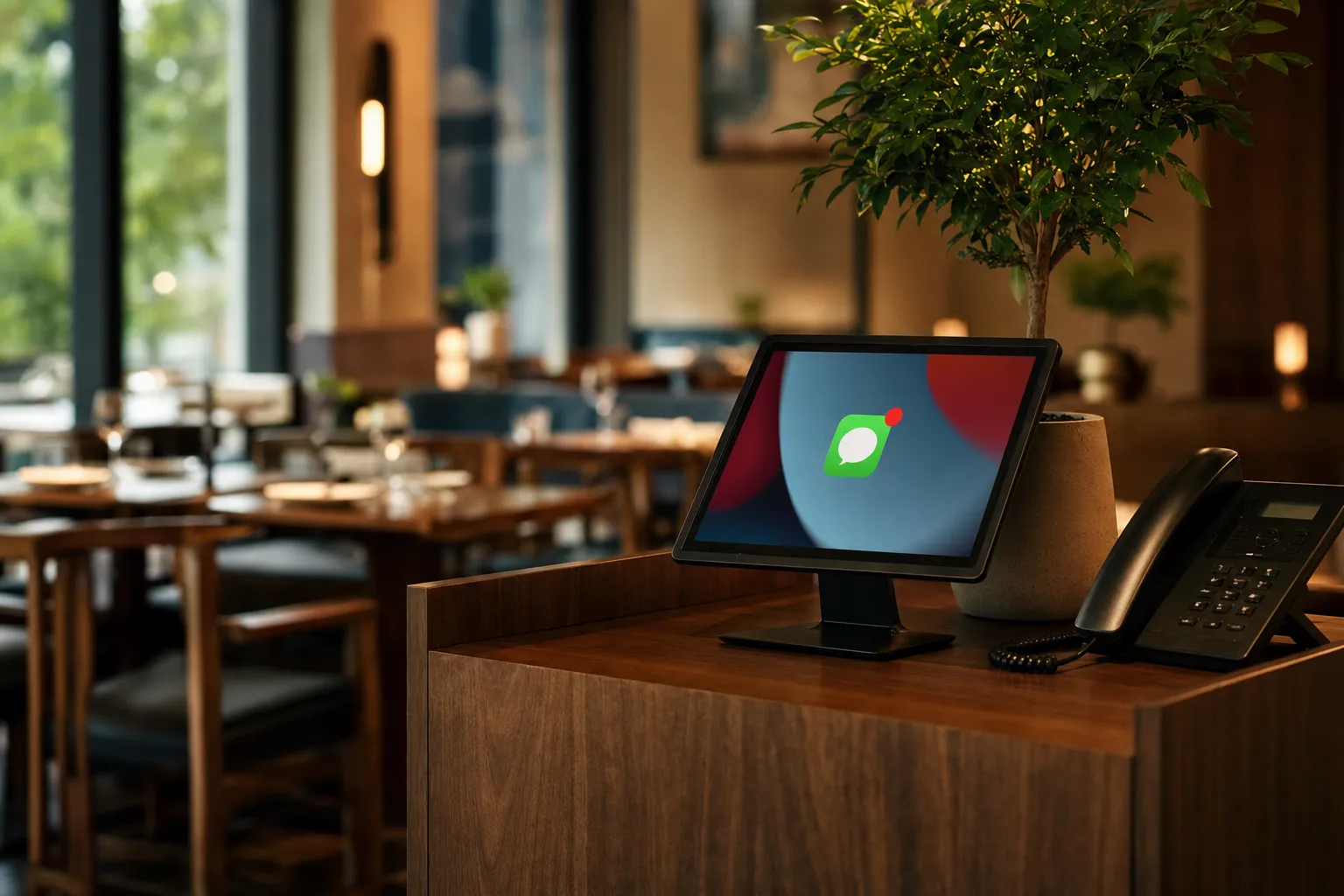
Missed call text-back for restaurants is an automation that instantly texts any caller you could not answer, with a link to book a table or place an order and an invite to reply. During the dinner rush, when every hand is carrying plates and the phone rings for the fifth time, that unanswered call would normally become a voicemail nobody checks, or worse, a guest who dials the pizzeria down the road. Text-back turns it into a saved reservation. It pairs naturally with a Voice AI receptionist that answers live and books the table, with the text acting as the safety net for anything that still slips through. This guide covers how it works, what it saves, and how to size the number for your own restaurant.
What is missed call text-back for restaurants?
Missed call text-back is a system that detects an unanswered call and replies with a text within seconds, before the caller has a chance to move on. The message is short and warm: it uses the restaurant's name, links straight to the reservation page or online menu, and asks the guest to reply with what they need. Instead of dead air, the caller gets a friendly hand reaching back out, and the conversation continues by text while your team stays on the floor.
The reason it matters for restaurants specifically is that your phone traffic is brutally lumpy. Calls cluster at exactly the moments you cannot pick up: the pre-dinner reservation wave, the Friday-night order rush, the Sunday lunch turnaround. A missed call in a quiet mid-afternoon is an annoyance. A missed call at 7:45pm on a Saturday is a table for four walking to a competitor. Text-back is built to catch the calls that land when you are least able to answer.
How does missed call text-back actually work?
The moment a call ends without being answered, the automation triggers a text to that number, and the guest can reply to book, order, or ask a question. There is no app for them to download and nothing for your staff to remember. It runs on your existing restaurant number, so the guest sees your name and never knows they hit an automation rather than a person.
Here is the flow in a typical service:
- A guest calls at 8pm to book a table, but every member of staff is mid-service and the phone rings out.
- Seconds after the call drops, the guest receives a text: a greeting, your booking link, and a line inviting them to reply with a date, time, and party size.
- The guest taps the link and books, or simply texts back "table for 2 at 8:30," and the conversation is handled by message.
- You see a confirmed reservation instead of a missed-call notification you would only have spotted after the guest already ate elsewhere.
The same path works for takeout. A caller who could not get through to order gets a text with a link to your menu, so a missed order becomes a placed one. The key is speed and a clear next step, not a generic "sorry we missed you" that leads nowhere.
Where a voice agent fits alongside the text
Text-back is the safety net, and a voice agent is the front door. A Voice AI receptionist picks up calls live, answers routine questions like opening hours and whether you take large groups, checks availability, and books the table straight away, day or night. When several calls land at once during a rush and one still slips past, the text-back layer catches it rather than letting it fall into voicemail. Together they mean no caller is ever met with silence, whether it is 8pm on a Saturday or 11am on a bank holiday when nobody is in yet.
Why do restaurants lose so much money to missed calls?
Restaurants lose money to missed calls because the loss never appears on any receipt, so nobody manages it. A guest who rings during service, gets no answer, and books elsewhere does not show up in your books as a lost table. The seat simply stays empty, or gets filled by a walk-in you would have had anyway, and the reservation that never happened is invisible. That invisibility is exactly why the leak runs year after year.
Two things make restaurants especially exposed. First, calls and demand peak at the same time, so your busiest, most valuable hours are the ones where the phone is most likely to ring out. Second, restaurant callers have very low patience. A guest deciding where to eat tonight is not going to leave a voicemail and hope you call back before they are hungry. They dial the next name on the list. The call is a booking walking out the door, and it leaves no trace.
What is a missed dinner-rush call actually worth?
Every unanswered call during service is a potential table or order you never invoiced, and the value adds up faster than most owners expect. The exact figure depends on your average spend per cover and how many calls you miss, so the honest move is to run your own numbers rather than trust a rule of thumb.
A worked example
Take a simple, illustrative example, not a promise about your restaurant. Say your average table is worth EUR 60 and you miss eight calls a week during peak service, when you are too busy to reach the phone. If just three of those callers would have booked or ordered, and text-back saves them, that is EUR 180 a week, or roughly EUR 720 a month, in bookings that would otherwise have vanished. Against a flat plan, the automation only has to save one or two calls a week to pay for itself, and everything above that line is revenue you were previously handing to the restaurant down the street.
Takeout orders stack on top. A missed order call at Friday peak is often worth more than a single cover, and those calls cluster precisely when your line is busiest. To put a real figure on your own restaurant, run your call volume through the free missed-call revenue calculator. It takes a couple of minutes and hands you a concrete number to weigh against a monthly plan, which beats a vague guess every time.
Missed call text-back vs a voicemail vs another phone line
Text-back wins on speed and on giving the guest a clear next step, while voicemail wins nothing and a second phone line just moves the bottleneck. The table below lays out the trade-off for a typical restaurant. Any figures are illustrative examples, clearly marked, not quotes for your venue.
| What you compare | Missed call text-back (Automis, from EUR 297/mo) | Traditional voicemail | Adding another phone line or staff |
|---|---|---|---|
| Typical cost | Flat fee from EUR 297/mo, no per-call meter | Free, but rarely checked in time | A full wage plus cover, or line rental |
| What the guest gets | Instant text with a booking or order link | Silence, then a request to leave a message | A ring, if someone is free to pick up |
| Speed of reply | Within seconds, guest still deciding | Hours later, guest already ate | Only as fast as a free pair of hands |
| Works during a rush | Yes, all calls at once, no busy signal | Yes, but nobody listens back in time | No, staff are on the floor with guests |
| Turns miss into booking | Yes, links straight to book or order | Almost never | Only if someone reaches the phone |
| Cost predictability | High: flat monthly fee | High, but the loss is hidden | Low: wages, cover, and turnover add up |
The pattern is clear. Voicemail feels free because the loss never lands as a cost, which is exactly why it goes unmanaged. Another line or another hire gives you a human voice but only when someone is free, and during your busiest service nobody is. Text-back, paired with a voice agent, covers every call at once with a flat, predictable fee, and it gives the guest a way to book in the same breath.
How do I set up missed call text-back without a tech headache?
You set it up by connecting the automation to your existing restaurant number and your booking or ordering page, and the fastest way to get there is a jumpstart audit. Rather than sell you a package, the audit looks at how calls, reservations, and orders flow through your restaurant today, finds the biggest leak, and launches the first automation on your live line so you can judge the return before scaling.
A short checklist of what a clean setup needs:
- Your current restaurant phone number, kept as-is, so guests dial the same line they always have.
- A link the text can point to: your reservation page, an online booking tool, or your menu for takeout.
- A short, warm message in your restaurant's voice, not a robotic auto-reply.
- A decision on whether a voice agent answers live first, with text-back as the backup for calls that still slip through.
That last point is where most of the value sits. The goal is not just to acknowledge a missed call, it is to complete the booking or the order, so the guest never has a reason to look elsewhere.
Does this actually work in a real business?
Yes, and the clearest proof runs in a demanding, appointment-driven setting rather than a restaurant. Clinica Santa Maria, a dental clinic, runs the Automis voice agent on its live phone line for missed calls, booking, and no-shows, so calls that used to hit voicemail at lunch, after hours, or during a rush now become booked appointments. Setup was quick rather than a drawn-out onboarding, so the clinic was capturing calls it would otherwise have missed almost from the start.
The parallel to a restaurant is direct. A dental practice and a busy dining room share the same core problem: high-value calls arriving in bursts, at exactly the moments the team cannot stop to answer. The mechanics that turn a missed clinic call into a booked appointment are the same ones that turn a missed dinner-rush call into a saved table. What changes is the destination of the link, a reservation or an order instead of a check-up.
Who feels the difference most
The restaurants that feel it most are the ones with sharp demand peaks and no spare hands during service: independent venues that fill on Friday and Saturday nights, small groups juggling reservation and order calls at once, and any kitchen where the phone rings straight through a rush. In every case the shape of the return is the same. You are buying back the guests who were quietly slipping away to the place that did pick up.
Is missed call text-back worth it for a small restaurant?
For a venue that lives on booked tables and peak-hour orders, the answer is almost always yes, because the maths turns on missed calls, not on the sticker price. If saving one or two calls a week already covers a large share of a flat monthly plan, the automation pays for itself quickly and everything above that line is upside. Automis plans start from EUR 297 per month as a flat fee, so a heavy Saturday costs the same as a slow Monday.
The honest test is not "can I afford the monthly fee." It is "how many tables and orders am I losing to a ringing phone, and what is each one worth." Run your call volume through the missed-call revenue calculator, compare the loss to a flat plan, and the decision usually makes itself. When you want a straight answer for your own service, book a jumpstart audit and the Automis team will size the first automation against your real numbers instead of a generic range.
Frequently Asked Questions
What is missed call text-back for restaurants?
It is an automation that sends an instant text to any caller you could not answer. The message greets them by name, links to your booking page or online menu, and invites a reply. A call that would have become a voicemail or a walkout turns into a reservation or a takeout order instead.
How fast does the text go out after a missed call?
Within seconds. The system fires the moment the call ends unanswered, so the guest gets a reply while your restaurant is still on their screen. Speed is the whole point: a caller who reaches the next place on their list before you respond is already gone.
Will it replace someone answering the phone during service?
No. A voice agent can answer live and book the table, and text-back is the safety net for calls that still slip through during a rush. Your team stays on the floor with guests instead of chasing a ringing phone, and no caller is left with silence.
How much does this cost for a restaurant?
Automis plans start from EUR 297 per month as a flat fee, not a per-call or per-minute meter. A busy Friday costs the same as a quiet Tuesday. Most restaurants recover the fee from a handful of saved reservations or takeout orders each week.
Ready to Transform Your Business?
See how our AI systems help local businesses answer every call, capture every lead, and automate the busywork.