How Much Does AI Automation Cost for a Restaurant?
AI automation for a restaurant starts from EUR 297/mo. Here is what that buys, what gets automated first, and how to work out your own number.

AI automation for a restaurant starts from EUR 297 per month with Automis, charged as a flat monthly fee rather than per call or per minute. Most owners begin with a jumpstart audit at that price, which maps how reservation calls, orders, and no-show reminders move through the venue today and then automates the single highest-value workflow first, usually the dinner-rush calls that are quietly costing you tables. The real question is not the sticker price. It is how many covers you already lose to a ringing phone and empty booked tables, and what buying those back is worth. This guide breaks down the cost, what gets automated first, and how to size your own number.
How much does AI automation cost for a restaurant?
AI automation for a restaurant starts from EUR 297 per month, and that is a flat, predictable fee rather than a meter that spikes when your phone gets busy. You are not billed per call or per minute, so a full Friday-night reservation wave costs you the same as a slow midweek afternoon. For a venue that lives on booked covers, predictable pricing matters as much as the headline figure, because restaurant phone traffic is brutally lumpy and per-minute vendors earn most exactly when your guests are stuck on hold.
The reason restaurants start at this price rather than commissioning a big custom build is that automation works best one workflow at a time. You do not need to automate the whole front of house on day one. You need to automate the thing losing you the most money first, prove it pays, then decide what comes next. That is what the from-297-EUR jumpstart audit is built to do.
Why the price is a starting point, not a ceiling
The 297 EUR figure is where a focused restaurant deployment begins, not a cap on what is possible. A single venue that wants its missed reservation calls answered and its bookings synced sits comfortably at the entry price. A small group running voice, WhatsApp confirmations, and no-show recovery across several locations will sit higher, because the agent is doing more work across more lines. The pricing tracks the scope of the job, not hidden usage, so your bill does not jump because you had a good weekend.
What does the jumpstart audit actually cover?
The jumpstart audit maps your current call, reservation, and reminder flow, then builds and launches the first automation on a live line so you can judge the return before scaling. It is deliberately not a slide deck. You come out of it with a working system on your real restaurant number, plus a clear picture of which workflow to automate next and roughly what it is worth in euros.
Here is what the audit looks at in a typical restaurant:
- Where calls go when the floor is mid-service, the line is engaged, or the venue is closed, and how many of those become an unheard voicemail.
- How guests currently book a table, and where the booking breaks down between the ring and a confirmed slot on the pass.
- How reservation reminders are sent today, and what your no-show rate looks like as a result.
- Which of these leaks is largest in money, so the first automation targets revenue rather than novelty.
That last point is the whole idea. Rather than sell you a package, the audit finds the single most expensive gap in your guest flow and closes it first. For a wider view of how to sequence this, the guide on where to start with AI automation walks through the same logic for other business types.
What gets automated first in a restaurant?
The missed-call and reservation workflow almost always comes first, because unanswered calls during service are the biggest silent leak in a restaurant. A guest deciding where to eat tonight who hits your voicemail does not leave a message and wait. They dial the next place on the list. That call is a table for four walking out the door, and it never shows up in your books as a loss because it never became a bill.
A voice agent picks up every one of those calls, day or night, answers routine questions like opening hours and whether you take large groups, checks live availability, and books the table straight into your system. If a call still slips through at peak, the missed call text-back safety net follows up by message instead of letting the guest evaporate. The Automis Voice AI receptionist is built to complete the booking, not just log that the phone rang.
No-show recovery usually comes second
Once the phone is answered, the next expensive gap is the table that was booked and never sat. A no-show wastes a slot you turned others away for, and a manual confirmation call is easy to forget on a service night. Automated reminders across voice and WhatsApp confirm the booking, offer an easy way to cancel or move it, and free the table early enough to resell when someone drops out. Owners often add this second precisely because the cost of an empty booked table is so easy to measure.
A simple sequence most restaurants follow
- Automate missed-call answering and reservations first, because it captures covers you are losing right now.
- Add no-show reminders and easy rebooking second, to protect the tables you already have on the book.
- Layer in WhatsApp confirmations and review requests once the first two are paying for themselves.
Keeping to this order means the automation funds the next step out of the revenue it recovers, so you are never paying for capability you have not yet proven.
AI automation vs more staff vs doing nothing: the real cost comparison
AI automation wins on predictable cost and round-the-clock coverage, hiring wins on human warmth for the guests already at the table, and doing nothing quietly costs the most of all. The table below lays out the trade-off for a typical restaurant. Any wage or loss figures are illustrative examples, clearly marked, not quotes for your venue.
| What you compare | AI automation (Automis, from EUR 297/mo) | Hiring someone to answer the phone | Doing nothing |
|---|---|---|---|
| Typical cost | Flat fee from EUR 297/mo, no per-call meter | A full wage plus taxes, holiday, and cover | Nothing on paper, but lost covers every week |
| Hours covered | 24/7, including nights, weekends, and closed days | About 8 hours a shift, one line at a time | Only when a free pair of hands can reach the phone |
| Concurrent calls | Many at once, no busy signal | One caller at a time | Second caller hits voicemail |
| Books into your system | Yes, native and automatic | Yes, if trained and not mid-service | Depends on who is free |
| Chases no-shows | Yes, built into reminders | Only if someone remembers | Rarely, so tables stay empty |
| Cost predictability | High: flat monthly fee | Medium: wage is fixed, cover and turnover add up | Low: the loss is invisible and unmanaged |
The pattern is clear. Another hire gives you warmth and judgement but limited hours and a full wage, and during your busiest service that person is carrying plates, not answering calls. Doing nothing feels free because the loss never lands as a cost, which is exactly why it goes unmanaged year after year. AI automation gives you predictable pricing and full coverage, and it turns calls that used to ring out into booked tables. This is not an argument to cut your team. It frees them from the phone so they can look after the guest in front of them.
What is the real cost of the calls and no-shows you already lose?
The most expensive host is the one you do not have, because every unanswered call and every empty booked table is revenue you never invoiced. In a restaurant, a single table can be worth EUR 50 to well over EUR 100 once you count drinks and dessert, so even a handful of missed calls at peak adds up fast.
A worked example on restaurant numbers
Take a simple, illustrative example, not a promise about your venue. Say an average table is worth EUR 60 to your restaurant, and you miss ten calls a week when the floor is slammed or the doors are shut. If just three of those ten would have booked, that is EUR 180 a week, or roughly EUR 720 a month, in covers that never happened. Against a EUR 297 plan, the automation only has to recover a little over one of those calls a week to pay for itself, and everything above that line is margin you were previously handing to the venue down the street that did pick up.
No-shows stack on top. Every booked table that never sits is a slot you may have turned a walk-in away for, and unlike a missed call it is a guest who already agreed to come in. Recovering even one or two no-shows a week with automated reminders often covers the plan on its own.
Get your own figure, not a rule of thumb
Those numbers are an example, not a promise. To put your own figure on it, run your call volume through the free Automis missed-call revenue calculator, then use the no-show cost calculator to see what empty booked tables are costing you on top. Both take a couple of minutes and hand you a concrete number to weigh against a flat monthly plan, which is a far better basis for the decision than a vague quote.
How does this play out in a real business?
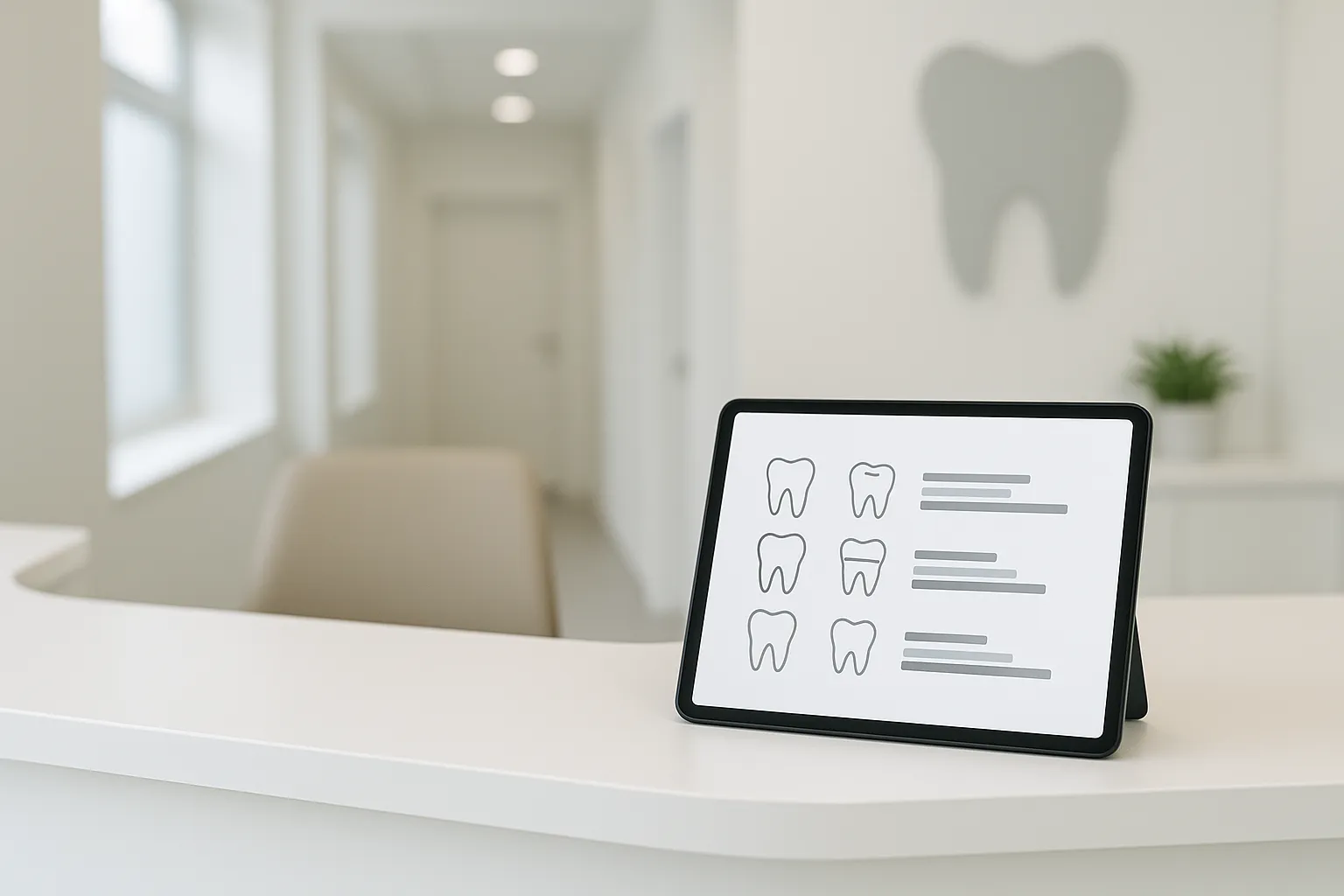
The clearest proof runs in a demanding, appointment-driven setting rather than a restaurant. Clinica Santa Maria, a dental clinic, runs the Automis voice agent on its live phone line for missed calls, booking, and no-shows, so calls that used to hit voicemail at lunch, after hours, or during a rush now become booked appointments. Setup was quick rather than a drawn-out onboarding, so the clinic was capturing calls it would otherwise have missed almost from the start.
The parallel to a restaurant is direct. A dental practice and a busy dining room share the same core problem: high-value calls arriving in bursts, at exactly the moments the team cannot stop to answer, plus booked slots that quietly go empty when nobody confirms them. The mechanics that turn a missed clinic call into a booked appointment are the same ones that turn a missed dinner-rush call into a saved table, on a flat monthly fee rather than a second wage.
Who feels the difference most
The restaurants that feel it most are the ones with sharp demand peaks and high-value covers: independent venues losing after-hours and Friday-night calls, growing groups juggling reservation and order lines at once, and any kitchen where the phone rings straight through a rush. In every case the shape of the return is the same. You are buying back the guests who were quietly slipping away, which is exactly the calculation most owners are running when they weigh the cost of automation.
Is AI automation worth the cost for a small restaurant?
For a venue that lives on booked covers, the answer is almost always yes, because the maths turns on missed calls and empty tables, not on the sticker price. If a single recovered booking a week already covers a large share of the monthly plan, the plan pays for itself quickly and everything above that line is upside.
The honest test is not "can I afford EUR 297 a month." It is "how many covers am I losing to a ringing phone and no-shows, and what is each one worth." Run the two calculators, compare the loss to a flat plan, and the decision usually makes itself. When you want a straight answer for your specific call volume and setup, book a jumpstart audit and the Automis team will size the first automation against your real numbers rather than a generic range.
Frequently Asked Questions
How much does AI automation cost for a restaurant?
AI automation for a restaurant starts from EUR 297 per month with Automis, billed as a flat monthly fee rather than per call or per minute. Most restaurants begin with a jumpstart audit at that price, which maps and automates the highest-value workflow first: usually missed reservation calls and no-show reminders.
Is it billed per call or per minute?
No. Automis charges a flat monthly fee from EUR 297, so a packed Saturday night costs the same as a quiet Tuesday lunch. That matters for restaurants because your calls cluster into peaks, and per-minute vendors profit exactly when your phone is busiest and you can least pick up.
What gets automated first in a restaurant?
The missed-call and reservation workflow almost always comes first, because unanswered calls during service are the biggest silent leak. No-show reminders usually follow. Starting with one high-value workflow keeps the cost low and lets you measure the return before adding more.
Is AI automation cheaper than hiring someone to answer the phone?
For most restaurants, yes. A flat plan from EUR 297 per month answers calls around the clock, books tables, and chases no-shows without holiday cover or turnover. It does not replace your team; it takes the phone load off the floor so they can look after the guests already in the room.
Ready to Transform Your Business?
See how our AI systems help local businesses answer every call, capture every lead, and automate the busywork.